Indoor plants make a home feel fresher, calmer and more alive, and many are sold as natural air purifiers. Here are five of the best indoor plants for air quality that are also easy to keep alive, plus an honest look at what plants can and cannot do for the air in your home.
Quick Picks
| Best For | Plant | Link |
|---|---|---|
| Best Overall | Costa Farms Snake Plant | Check price on Amazon |
| Best for Beginners | Costa Farms Golden Pothos | Check price on Amazon |
| Best for Low Light | Costa Farms ZZ Plant | Check price on Amazon |
| Best with Flowers | Costa Farms Peace Lily | Check price on Amazon |
| Best Pet-Friendly | Spider Plant | Check price on Amazon |
Do Indoor Plants Really Clean the Air?
The idea comes from a well-known NASA study from 1989, which found that some plants removed certain chemicals from sealed test chambers. Later research has been more cautious. Reviews of the evidence suggest that in a normal home, with fresh air constantly moving in and out, a few houseplants have only a very small effect on air quality compared with ventilation or a good air purifier.
That does not make plants a bad idea. They add greenery, can lift your mood and make a space more pleasant. Just think of them as a bonus, not a replacement for opening windows, using exhaust fans and keeping up with cleaning. Every listing below is described as air purifying by the seller, so treat that as a nice extra and not a medical or health claim.
How to Choose Indoor Plants
1. Match the plant to your light. Note how much sun each room gets. Snake plants and ZZ plants tolerate low light, while pothos and spider plants prefer bright, indirect light.
2. Be honest about your watering habits. If you forget to water, pick a drought-tolerant plant like a ZZ or snake plant. If you like a routine, a peace lily will show you when it is thirsty.
3. Check pet safety. Several popular houseplants can be harmful if chewed by cats and dogs. The ASPCA lists snake plants, pothos, ZZ plants and peace lilies as toxic to pets, while spider plants are considered non-toxic.
4. Think about size. Large plants make a statement in a corner, while smaller ones suit shelves and desks.
5. Use pots with drainage. Overwatering is the most common way to lose a houseplant, and a drainage hole helps a lot.
1. Best Overall: Costa Farms Snake Plant
The snake plant (Sansevieria) is a classic for a reason. Its upright, sword-like leaves look sculptural, and it is described as nearly indestructible and able to thrive in low light. This listing is the Costa Farms snake plant, about 12 to 20 inches tall in a 6-inch pot.
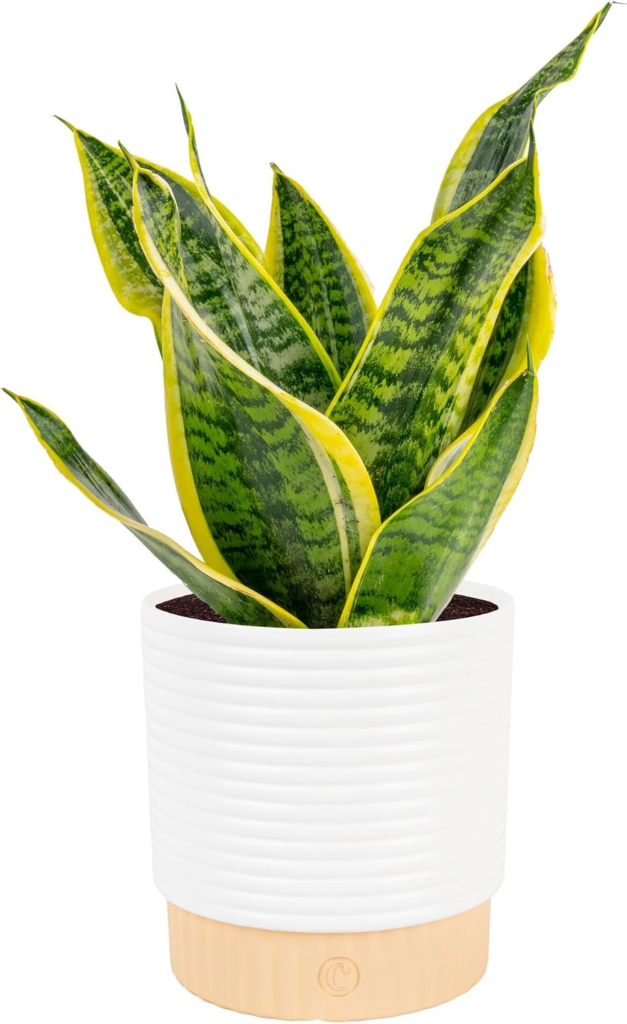
Why it works: It tolerates neglect, fits in almost any room and suits modern, minimalist and boho styles.
Pros:
- Handles low light and irregular watering
- Upright shape fits narrow spaces
- Slow, tidy growth
Cons:
- Toxic to cats and dogs if chewed
- Overwatering can cause root rot
Best for: Beginners, bedrooms and offices with limited light.
Check current price and reviews on Amazon
2. Best for Beginners: Costa Farms Golden Pothos
Golden pothos is a fast-growing trailing vine with heart-shaped leaves that looks lovely on a shelf, on top of a bookcase or in a hanging planter. The seller describes it as resilient and beginner-friendly. This listing is the small version, about 8 to 12 inches tall.
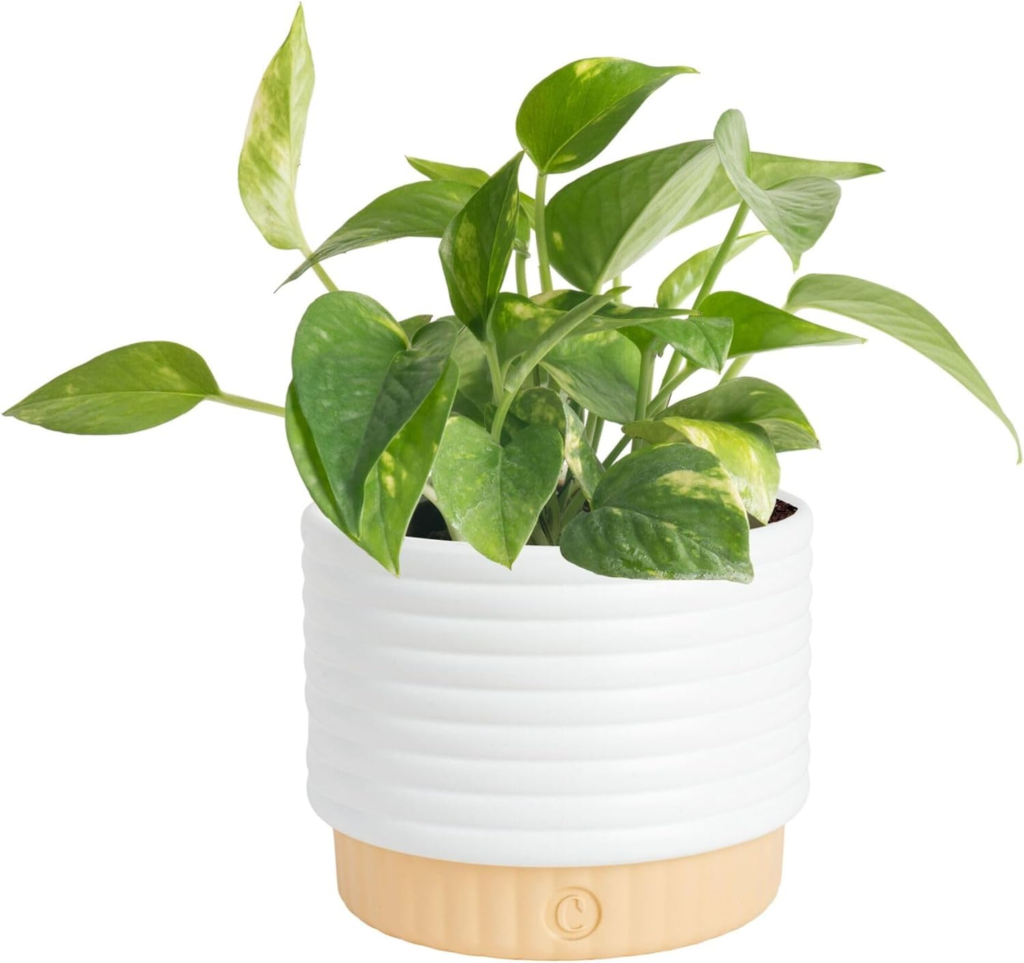
Why it works: It grows quickly, bounces back from missed waterings and lets you shape it by trimming or training the vines.
Pros:
- Very forgiving of mistakes
- Trailing vines add softness to shelves
- Easy to propagate from cuttings
Cons:
- Toxic to pets if chewed
- Leaves lose color in very dim light
Best for: First-time plant owners and anyone who wants a trailing plant.
Check current price and reviews on Amazon
3. Best for Low Light: Costa Farms ZZ Plant
The ZZ plant has glossy, deep green leaves and stores water in its roots, which is why it is described as drought-tolerant and nearly impossible to kill. This listing is the 12 to 20 inch version that arrives in a 6-inch pot.
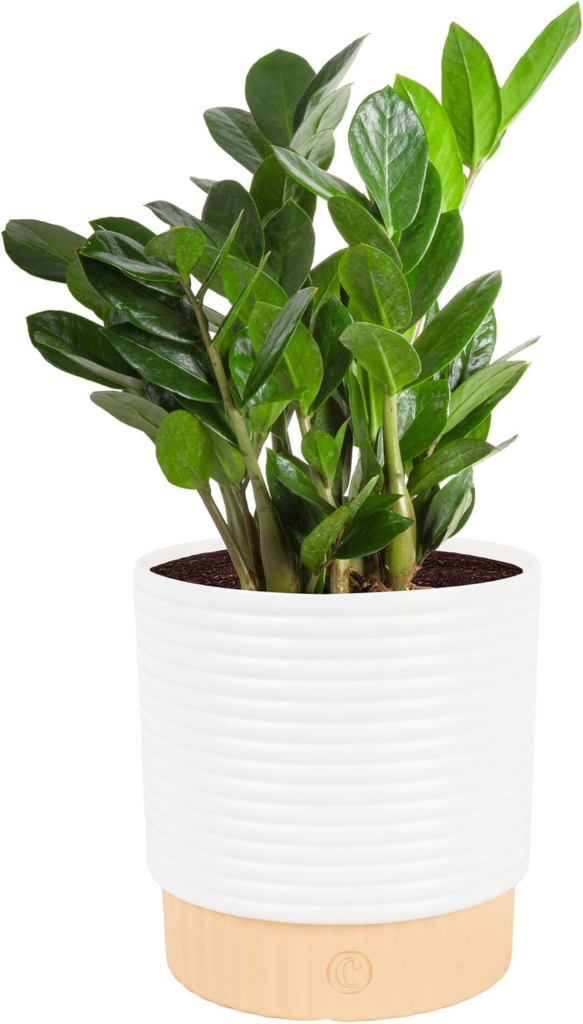
Why it works: It copes with dim corners, offices and rooms with only a small window.
Pros:
- Thrives in a range of light levels
- Needs little water
- Glossy leaves look polished year round
Cons:
- Toxic to pets if chewed
- Slow to grow, so you pay for size up front
Best for: Offices, hallways and anyone who travels a lot.
Check current price and reviews on Amazon
4. Best with Flowers: Costa Farms Peace Lily
The peace lily is one of the few easy houseplants that flowers indoors, with glossy green leaves and white blooms. The seller describes it as forgiving and happy with weekly watering and bright, indirect light, though it will tolerate lower light. This listing is the larger Costa Farms version in a decorative planter.
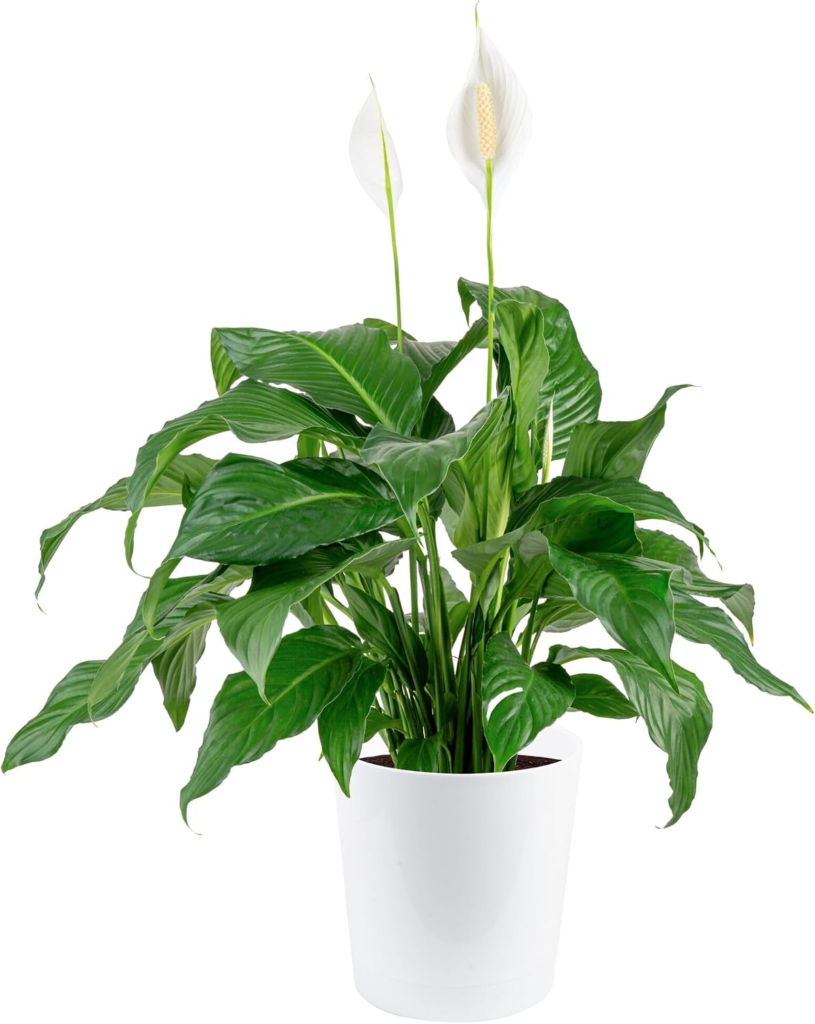
Why it works: The white flowers add a graceful, calming touch, and the plant droops visibly when it needs water.
Pros:
- Indoor flowers with little effort
- Dramatic droop tells you when to water
- Works in a living room or bedroom
Cons:
- Toxic to cats and dogs if chewed
- Brown leaf tips if the plant is underwatered or gets dry air
Best for: People who want flowers and a regular watering routine.
Check current price and reviews on Amazon
5. Best Pet-Friendly: Spider Plant
The spider plant has arching, striped leaves and sends out small baby plantlets that you can pot up for free. The listing describes it as non-toxic and safe for homes with cats and dogs. This listing is the reverse variegated spider plant in a 4-inch pot.
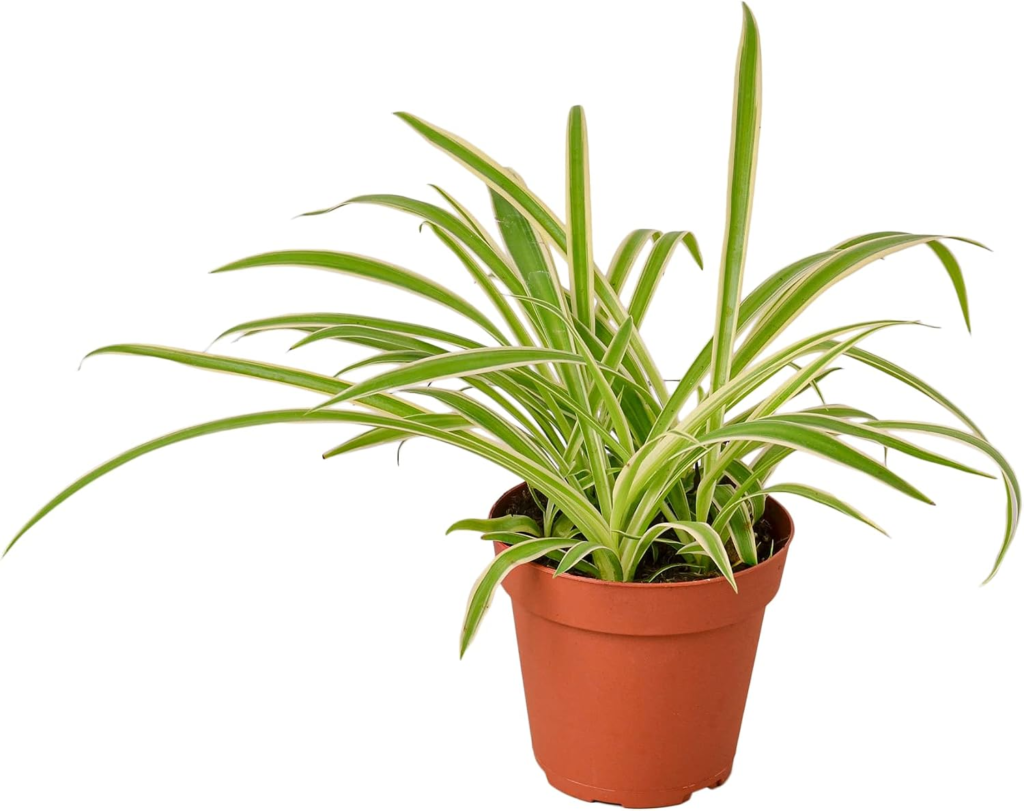
Why it works: It is a rare easy-care plant that is considered non-toxic to pets, and it looks great in a hanging basket or on a high shelf.
Pros:
- Considered non-toxic to cats and dogs
- Produces baby plants you can share
- Tolerates a range of conditions
Cons:
- Pets may still chew the leaves, so keep it out of reach
- Tips can brown if the water is high in minerals
Best for: Homes with cats and dogs.
Check current price and reviews on Amazon
Simple Plant Care Tips
- Check the soil before watering. Most of these plants prefer to dry out a little between drinks.
- Wipe dusty leaves with a damp cloth every few weeks so they can take in light.
- Use a pot with drainage holes and empty the saucer after watering.
- Rotate plants every month or so for even growth.
- Repot into a slightly larger pot when roots circle the inside or poke through the bottom.
Frequently Asked Questions
What are the best indoor plants for air quality? Snake plants, pothos, ZZ plants, peace lilies and spider plants are popular choices and are easy to grow. Keep in mind that houseplants have a modest effect on air in a typical home, so ventilation and cleaning matter more.
How many plants do I need to improve air quality? The original experiments used sealed chambers and far more plants than a normal room holds. In a real home a few plants will not noticeably change air quality, but they are still worth having for the greenery and mood boost.
Which air-purifying plants are safe for pets? Spider plants are considered non-toxic to cats and dogs. Snake plants, pothos, ZZ plants and peace lilies are listed as toxic if eaten, so keep them out of reach or choose pet-safe alternatives.
What is the easiest plant for a beginner? Golden pothos and snake plants are two of the most forgiving choices. They tolerate missed waterings and a wide range of light.
Which plants grow best in a bedroom? Snake plants, ZZ plants and pothos tolerate lower light and need little care, which makes them good bedroom picks. Check pet safety first if animals share the room.
Final Thoughts
The best indoor plant for you is the one that suits your light, your schedule and your pets. For most people, a snake plant or golden pothos is an easy place to start. If you have pets, choose the spider plant, and if you want flowers, the peace lily is a graceful option. Whatever you pick, enjoy the greenery and keep a window open for the real air quality boost.
Happy planting! If this guide helped, bookmark it and share it with a friend who wants to bring more green into their home.
Disclosure: As an Amazon Associate I earn from qualifying purchases. If you buy through links on this page, I may earn a small commission at no extra cost to you.